The best time to visit the 5th Station, honestly
The winter–summer trade
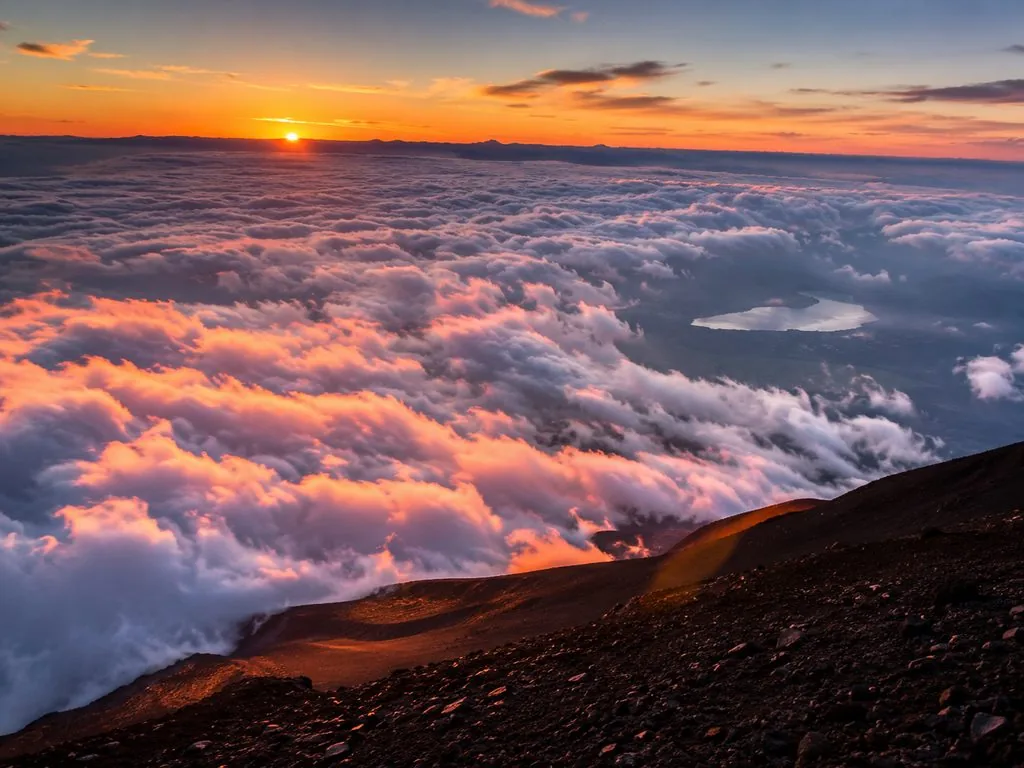
Winter air is dry and the mountain stands out for days at a time; summer air is humid and Fuji spends June to August behind cloud more often than in front of it. But winter is also when the summit is genuinely dangerous and off-limits — this site never encourages off-season climbing — and when mountain weather can shut the Subaru Line without notice. So: viewing trips favour the cold half of the year, climbing is confined to early July through early September, and a summer visitor to the 5th Station should arrive with expectations set by the weather page.
The hour matters more than people think
Across seasons, the clearest window on a given day is early morning, roughly 6 to 8 am. Cloud builds through the day on this mountain with the reliability of a commuter timetable. First bus up beats the fourth, and afternoon arrivals meet the mountain at its shyest. If a tour offers an early Shinjuku departure, that is not a hardship; it is the whole strategy.
The day of the week
Weekdays are quieter than weekends, and Tuesday to Thursday quietest of all — on the buses, at the station terraces, on the pagoda steps. The mountain does not care, but your photographs of the foreground will.
What this means for each kind of visitor
Want the postcard view: a clear-season morning at the lakes, midweek if you can — the loops on viewing tours run year-round. Want to stand at 2,305 m: any day the road is open works, because the station’s indoor pleasures survive fog. Want the summit: your window is early July to early September, full stop — the climbing page has the season, the fee and the gear rules. One reviewer of the flagship loop wrote, verbatim: “Excellent trip, very knowledgeable guide MEG who made sure we did not miss anything. She even parted the clouds so we could see Mt Fuji”. Guides get credit for the weather when it cooperates; note what that implies about the days it does not.
If the view is the point, book a morning departure on a Tuesday, Wednesday or Thursday outside the rainy months, and still check the forecast the night before. That is the whole system; there is no secret beyond it.
The viewing loop, checked live
The lakes-and-viewpoints loop at $49 — 4.8 across 5,499 reviews, never ascends the mountain — is the one I recommend timing carefully. Dates below.
Frequently asked questions
Which month is Mount Fuji most visible?
The winter months, when dry air leaves the mountain standing clear for days. June to August is the worst stretch — rainy-season humidity and cloud — and it is also the only climbing window, which is the trade explained on weather and clouds.
What time of day is best to see Mt Fuji?
Early morning, roughly 6 to 8 am, before the day’s cloud builds. Book the earliest departure you can get and put the viewing stops first — the tours that work the viewpoints are on viewing tours.
What is the best day of the week to go?
Tuesday to Thursday, which are the quietest on the buses and at the viewpoints. Weekends fill first. The full timing logic for a Tokyo-based visit is on the day trip page.
Can I climb Mount Fuji in the best viewing season?
No. Clear-air winter is exactly when the mountain is snowbound and genuinely dangerous, and the official season runs early July to early September only — the climb, with the honest warnings.