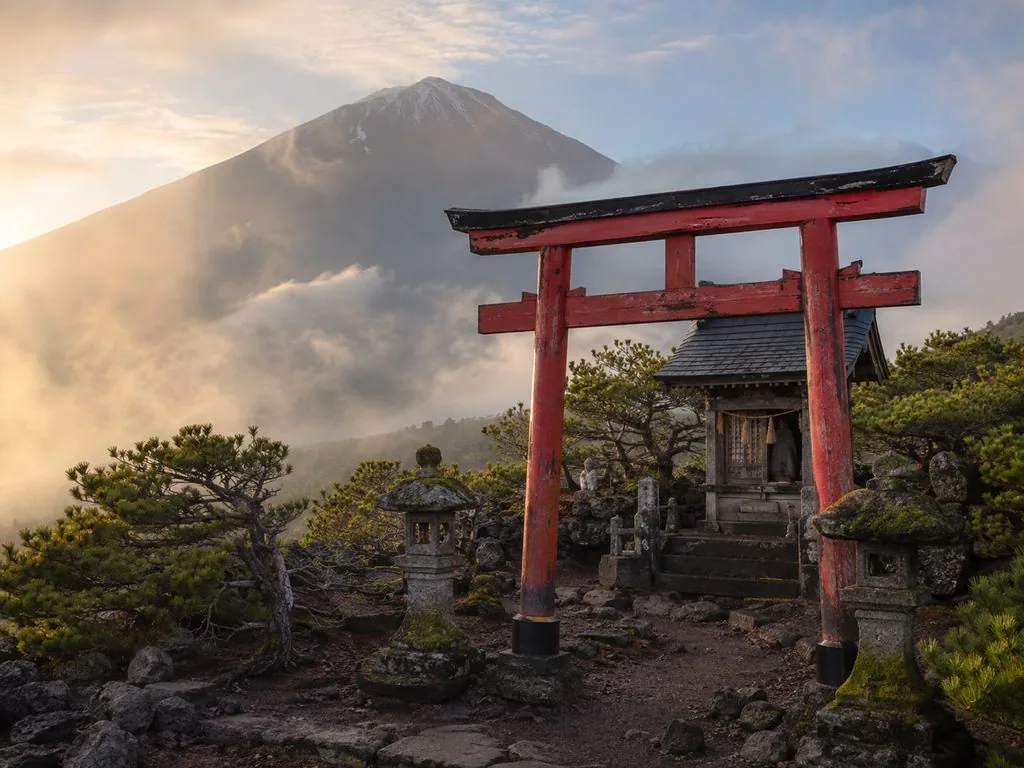
The Komitake Shrine at the 5th Station
What to do there
Pay your respects as at any shrine, and take the quiet — it is the one spot on the terrace where the tour groups thin out. Climbers traditionally stop here before setting off up the Yoshida Trail, a habit I kept every season I portered; the trail and its rules live on the climbing page. Even on a socked-in day the shrine works, which is more than the view can say — the rest of a cloudy hour is on what to do.
The mountain behind the shrine
Fuji last erupted in 1707 and has been climbed as an act of devotion for centuries; the tradition that a clear view of the mountain brings good luck survives because the view is genuinely rare — how rare, and where to try. The shrine is the five-minute stop that makes the whole terrace mean something.
Seeing it without planning a thing
Every 5th Station bus stop includes time enough for the shrine. The flagship loop at $151 allows about an hour up there, road and season permitting.
Frequently asked questions
What is the shrine at the Mt Fuji 5th Station?
The Fujisan Komitake Shrine — a small working shrine beside the shops at 2,305 m, where climbers traditionally pray before the Yoshida Trail. It is part of any sensible hour up there — the rest of that hour.
Why is Mount Fuji a UNESCO Cultural site rather than a natural one?
Because the 2013 listing honours the mountain’s centuries as a sacred and artistic subject — the Sengen shrines, the pilgrimage routes, the art — not its rock. The climbing tradition continues on the Yoshida Trail.
Is the shrine worth visiting if the weather is bad?
It is the best thing up there in bad weather — clouds cancel views, not shrines. The station sits inside the cloud deck often, so knowing the cloud-proof stops matters — the weather truth.