Can you see Mount Fuji from the 5th Station?
The geometry, in one paragraph
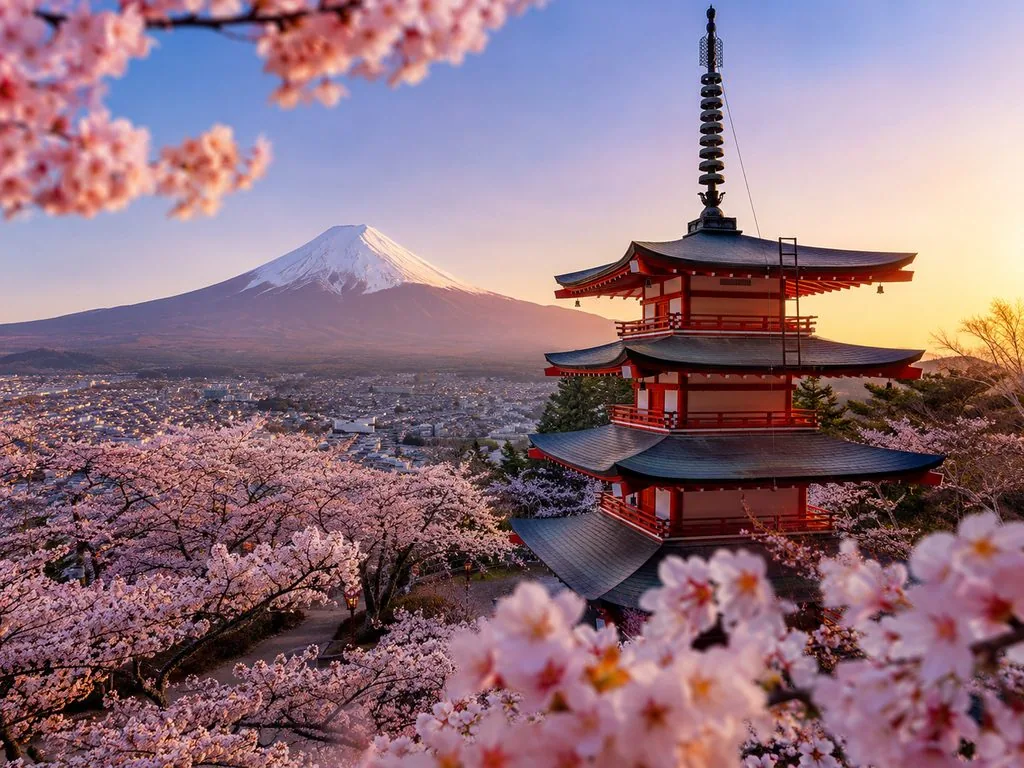
Mount Fuji is a single free-standing cone. Its beauty is its outline, and an outline needs distance. At 2,305 m you have traded all of your distance for altitude: the summit is a brown slope filling the sky above you, the skirt of the mountain is the ground you walk on, and the shape that appears on every postcard has vanished because you are inside it. Nineteen summers on this slope and I never once photographed the cone from the station, because nobody can.
What you see instead
On a clear morning the station looks down on the cloud tops — the sea of clouds, with Lake Kawaguchi sometimes showing through a gap — and up at the summit ridge. That view is real and it is worth having, but it is a different product from the postcard, and it is never guaranteed: the station itself sits inside the cloud layer often enough that some visitors see nothing in any direction. In Japanese culture, catching a clear view of Fuji is considered good luck, which is a polite way of saying how often the mountain hides. The odds by month and hour are on weather and clouds.
Where the postcard views actually are
All below, all on the north side I live on. Lake Kawaguchi gives the classic cone-over-water composition, and Oishi Park on its far shore adds flower beds in the foreground. The Chureito Pagoda at Arakurayama Sengen Park — about 400 steps up from the street — is the five-storey-pagoda-plus-Fuji frame you have seen on magazine covers. The spring ponds at Oshino Hakkai put old-village Japan in front of the mountain. Every one of them depends on the same weather the station does; the difference is that from these spots, when the air clears, you get the whole mountain.
The tours are split along exactly this line
The best-rated big product in this market never ascends Fuji at all: the viewing loop through Oishi Park, Lake Kawaguchi and Oshino Hakkai at $49, rated 4.8 across 5,499 reviews. One of its guests put the whole subject better than I can: “Our guide Diffany was very important in guiding us and making up for the fact that Mount Fuji was shy and hiding behind the clouds.” The pagoda itinerary — Chureito Pagoda, Lake Kawaguchi, Oshino Hakkai, also $49, 4.8 across 3,614 reviews — is the one built around the magazine-cover shot. I compare them in the lake loop review and the pagoda tour review, and the category lives on viewing tours.
If the photograph is the goal, plan it for early morning — roughly 6 to 8 am is the clearest window on most days — and hold a winter or shoulder date if you can. Summer haze is the enemy of outlines.
The postcard-shot day, checked live
The pagoda loop below is the one I point photographers to first. No tour parts clouds, so read when to go before you pick a date.
Frequently asked questions
Can you see Mt Fuji from the 5th Station?
You can see parts of it — the summit cone above you and the slope you stand on — but never the full mountain, because you are two-thirds of the way up it. The whole-cone views are from Lake Kawaguchi, Oishi Park and the Chureito Pagoda below, weather permitting — the visibility odds.
Where is the best view of Mount Fuji?
For the classic compositions: Lake Kawaguchi and Oishi Park for cone-over-water, the Chureito Pagoda — about 400 steps up — for the pagoda frame, and Oshino Hakkai for the village foreground. The tours that work those spots are on viewing tours.
Is the view from the 5th Station bad, then?
It is a different view, and on a clear day a good one: cloud sea below, summit above. It is simply the view from a mountain rather than of one. Whether that trade suits you is the whole question on is it worth it.
Can any tour guarantee I see Mount Fuji?
No, and be wary of anyone implying otherwise. The mountain disappears for days at a time, especially June to August. Early morning, roughly 6–8 am, is the clearest window — how I time a visit.